

Building Commercial Focus and Pitch Clarity at Talentta
The Context
Talentta is a Nigerian recruitment platform founded by Emmanuel Oluwagbemi to help businesses find suitable talent and connect underserved people with employment opportunities. When we began working together through DOHE, Emmanuel already had a working product, early users and a strong vision for the company.
As his coach, I supported him in thinking through the decisions behind that vision: where to focus, how to reach paying customers, how to organise execution and how to communicate Talentta’s value to potential funders. We worked together from May to October 2026.
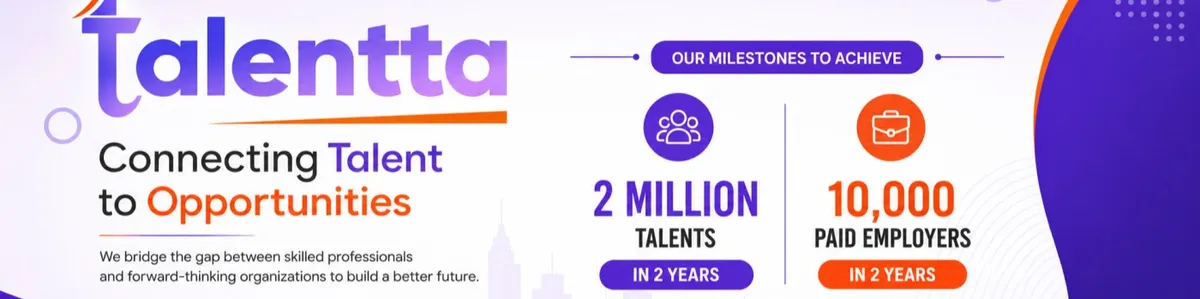
Talentta's future ambitions include reaching 2 million talents and 10,000 paid employers within two years.
The Challenge
Emmanuel was balancing product development, local employer acquisition, AI-assisted hiring, WhatsApp integration and international ambitions. Each opportunity required attention, resources and a different route to customers. The coaching created a regular space to examine assumptions, clarify priorities and identify practical next steps.
Strategic Intervention
01 — Commercial priorities and customer understanding
We explored Talentta’s customer segments and routes to market, connecting growth ambitions with immediate commercial questions: who would pay, why they would choose Talentta and how the team would reach them.
In one discussion, Emmanuel was considering ending some team members’ involvement. Through brainstorming, we explored an alternative: deploy them into field sales and combine employer outreach with customer research. This gave the activity a clearer purpose—understand recruitment needs, explain Talentta’s relevance and bring insights back into the business.
02 — Pitch clarity and funding preparation
Ahead of the Meta competition, I reviewed the pitch deck and challenged whether a 20-slide presentation could communicate its central message within five minutes. My feedback focused on the customer problem, Talentta’s differentiation and evidence of existing demand.
I encouraged Emmanuel to make the AI and WhatsApp proposition easier to understand: helping local businesses access hiring support through conversations, using a channel they already knew.
I also recommended strengthening the use-of-funds slide. Alongside explaining costs, the pitch needed to show what the money would enable for customers and the business. Emmanuel confirmed that the team revised the presentation following this feedback. The updated deck connected the grant with reaching more underserved talent and increasing the number of paying local businesses.
03 — Accountability and practical execution
Our work continued through conversations about sales responsibilities, team performance, customer support, operational priorities and the role of a physical office in building employer trust. I followed up on earlier discussions and asked questions about ownership, dependencies and how progress would be measured.
The Result
Talentta won a $5,000 cash grant in the Meta Pitchathon, alongside Meta credits. Emmanuel and his team delivered the presentation and achieved the win. My coaching contribution was to help clarify the pitch and strengthen the connection between the funding request and intended business progress.
Emmanuel subsequently reported using grant funding to establish a physical office space, with marketing activation as the next priority. By October, he also reported approximately 20–30 daily sign-ups as the WhatsApp integration became operational and the team prepared wider promotion.
The progress connected pitch preparation with practical capacity: funding to support the next stage of operations, a clearer approach to employer outreach and continued work on customer acquisition.
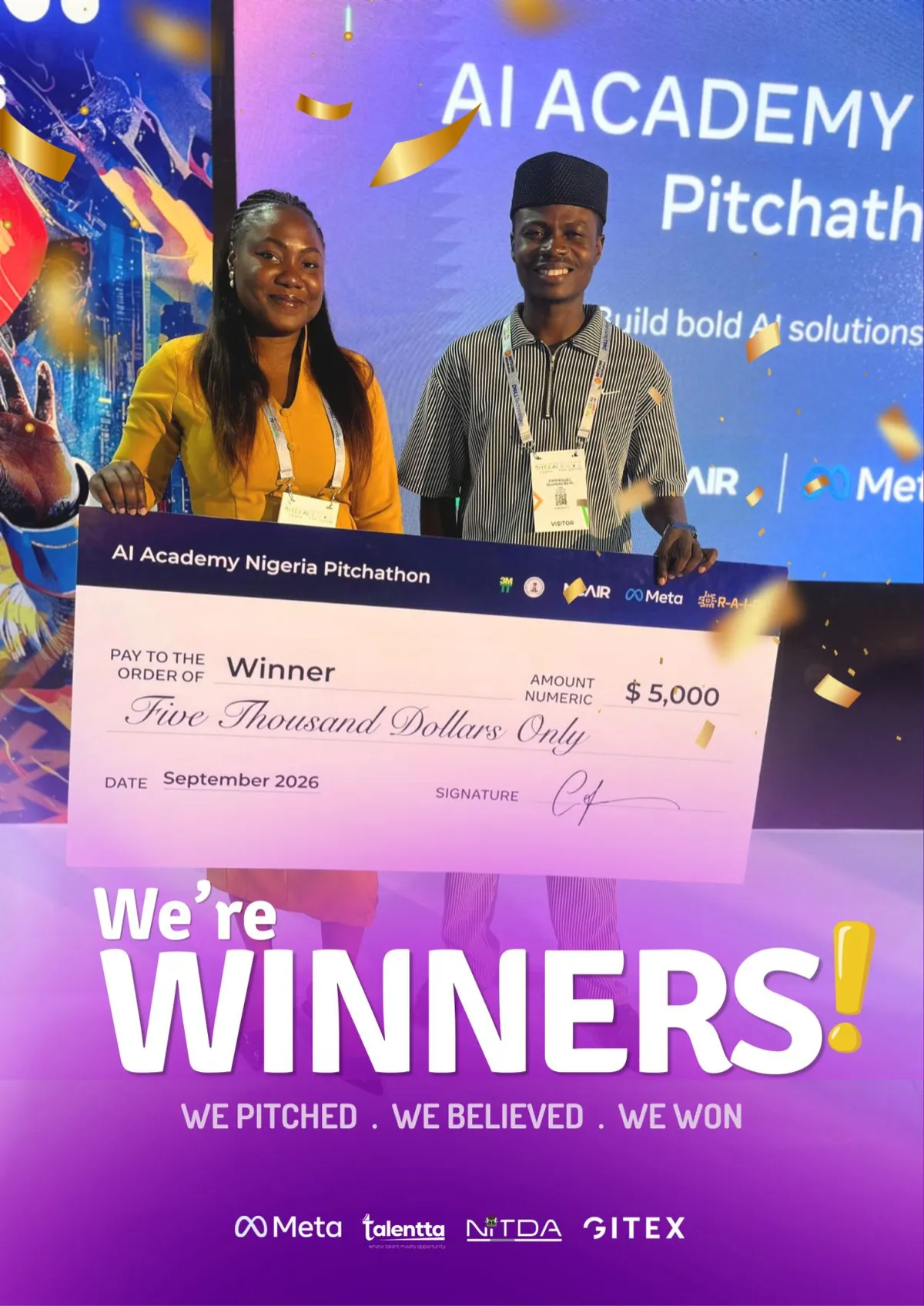
TALENTTA TEAM • $5,000 META PITCHATHON AWARD
Client Testimonial
“She remembers what we have discussed, follows up and brings critical thinking into our conversations.”

“Adrijana is very intentional about the startup she coaches. I really enjoyed my sessions with her and appreciated her resilience. She remembers what we have discussed, follows up and brings critical thinking into our conversations.
She adapted her coaching to the realities of building our business, including our busiest periods as we prepared to open the office and organise the team. Her support helped us keep reflecting on our priorities while moving forward. It was a wonderful experience, and I really appreciate the opportunity to have been coached by her.”
“Adrijana gave us specific feedback that brought greater clarity to our pitch.”
“Adrijana gave us specific feedback that brought greater clarity to our pitch, particularly around our customers and what we would use the funding for. She encouraged us to explain the progress the money would enable, alongside the costs we needed to cover.
We changed the presentation to make that clearer as we prepared for the competition. Our team went on to win the $5,000 Meta Pitchathon award. The grant helped us establish a physical office space and prepare for our next stage of marketing and employer outreach.”
Emmanuel Oluwagbemi
Founder, Talentta
Key Outcomes
Outcome
Result
Pitch preparation
Clearer customer message and a revised use-of-funds narrative.
Competition milestone
$5,000 Meta Pitchathon win, alongside Meta credits.
Operational progress
Grant funding supported establishing a physical office space.
Sales approach
Identified a way to combine employer outreach with customer research.
Founder support
Consistent follow-up, critical thinking and coaching adapted to the realities of building the business.
Other Case Studies
IMPORTANT LINKS
IMPRESSUM
GTM Advantage and its accounts on Linkedin are owned by Adrijana Daragon.