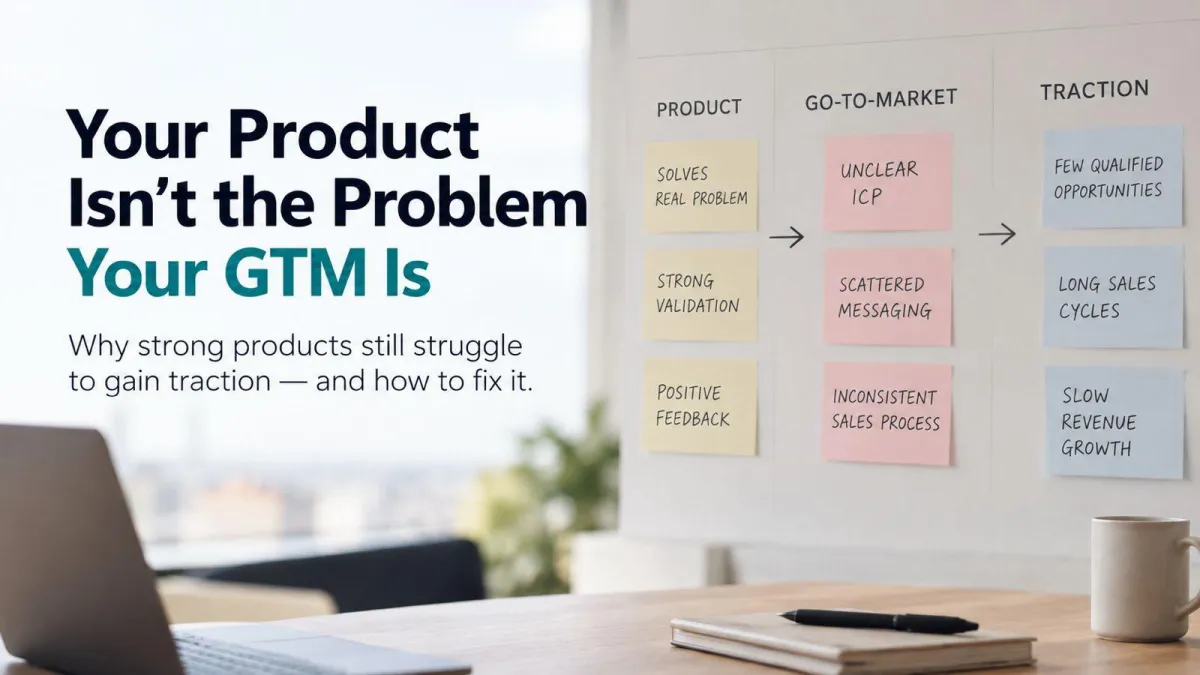
Your Product Isn't the Problem. Your Go-To-Market Is.
I have watched brilliant B2B tech products fail. It wasn't because the technology was weak or the team lacked talent. It was because the market never quite "got it."
The history of tech is littered with overfunded failures like Quibi, Jawbone, and Better Place. These companies had innovation, funding, and vision, but they lacked a repeatable commercial engine. They prove a hard truth: Strong products fail when the adoption path is too weak.
The 5 Core GTM Mistakes Killing Your Scaleup
When growth remains unpredictable despite a strong product, it’s usually due to one of these five recurring gaps:
The Positioning Gap: If you don’t clearly answer "Who is this for and why now?", your prospects will say "interesting" but never convert. Position around the problem, not the features.
The ICP Mistake: Being too broad makes your messaging generic. Define your Ideal Customer Profile based on who converts fastest and stays longest—not who sounds the most impressive.
The Messaging Flaw: Are you product-led or outcome-led? Flip your script. Don't tell them you have "AI-powered analytics"; tell them you "cut campaign reporting time from 3 days to 30 minutes."
Channel Misalignment: Activity does not equal pipeline. Map where your ICP actually makes decisions. If your best deals come from content, double down there and stop spreading the budget thin on low-intent channels.
The Scaling Error: Trying to scale execution before the GTM foundation is validated is like pouring gasoline on a broken engine. You’ll only increase your Cost Per Acquisition (CAC) and churn.
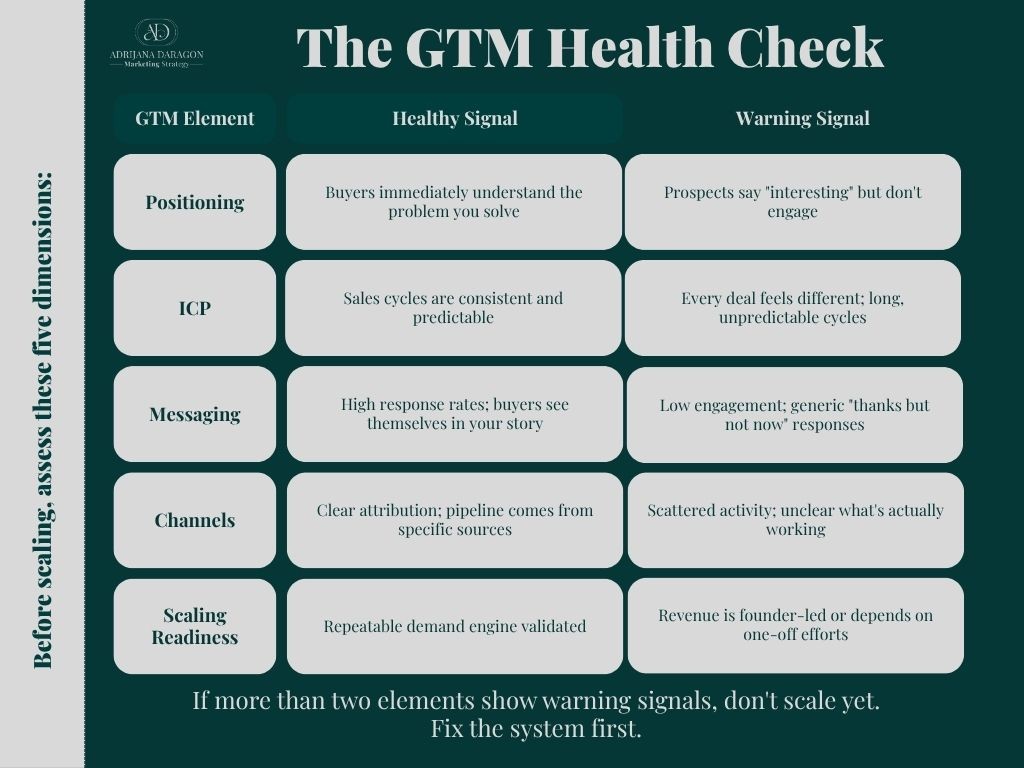
The GTM Health Check
Before you hire more sales reps or increase ad spend, look for the "Healthy Signals." Are your sales cycles consistent? Do buyers immediately understand the problem you solve?
Final Perspective: Strong execution cannot compensate for a weak strategy. If your product is solid but growth feels reactive, the issue isn't effort—it's architecture. Fix the system first, then scale what works.