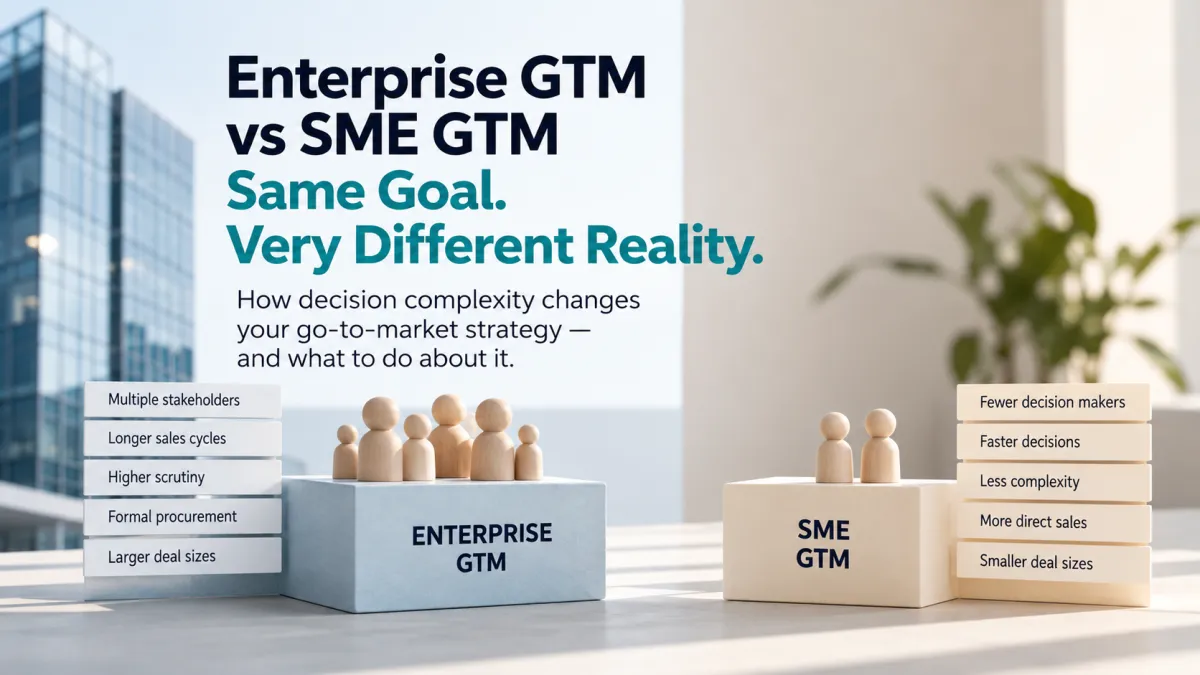
Enterprise GTM vs SME GTM: Why Decision Complexity Kills Deals
Enterprise growth looks attractive from the outside: bigger logos, larger contracts, and multi-year revenue visibility. But there is a silent killer that rarely gets discussed in the boardroom—Decision Complexity.
In my experience working inside large organizations, Enterprise GTM doesn’t fail because the technology is weak. It fails because teams underestimate the shift from selling a solution to navigating a governance system.
Enterprise is Not "Bigger"—It’s More Political
The fundamental shift when moving from SME to Enterprise isn't deal size; it’s power distribution.
In SMEs: Authority is concentrated, decisions are personal, and speed is a competitive advantage.
In Enterprises: Authority is fragmented, incentives are often misaligned, and every decision must be defensible to a committee.
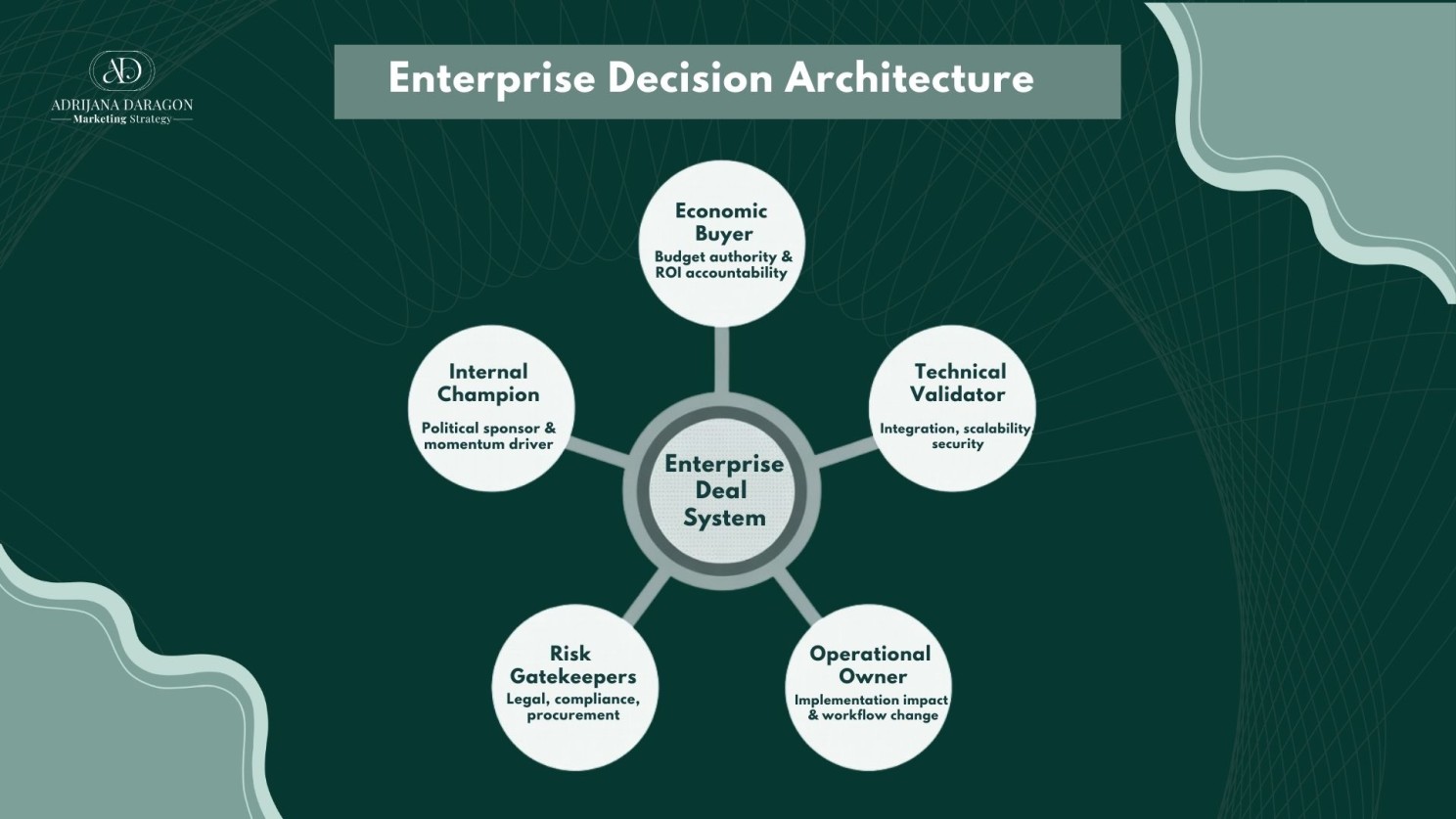
The Enterprise Decision Architecture
To win, you must stop "persuading" and start "orchestrating." A typical enterprise deal requires a "Yes" from five distinct lenses:
Economic Buyer: Focused on ROI accountability.
Technical Validator: Assessing integration and scalability risk.
Operational Owner: Concerned about implementation friction.
Risk Gatekeepers: Legal, compliance, and procurement.
Internal Champion: Providing the necessary political sponsorship.
If your GTM strategy only speaks to one of these stakeholders, the others will quietly delay or kill the deal.
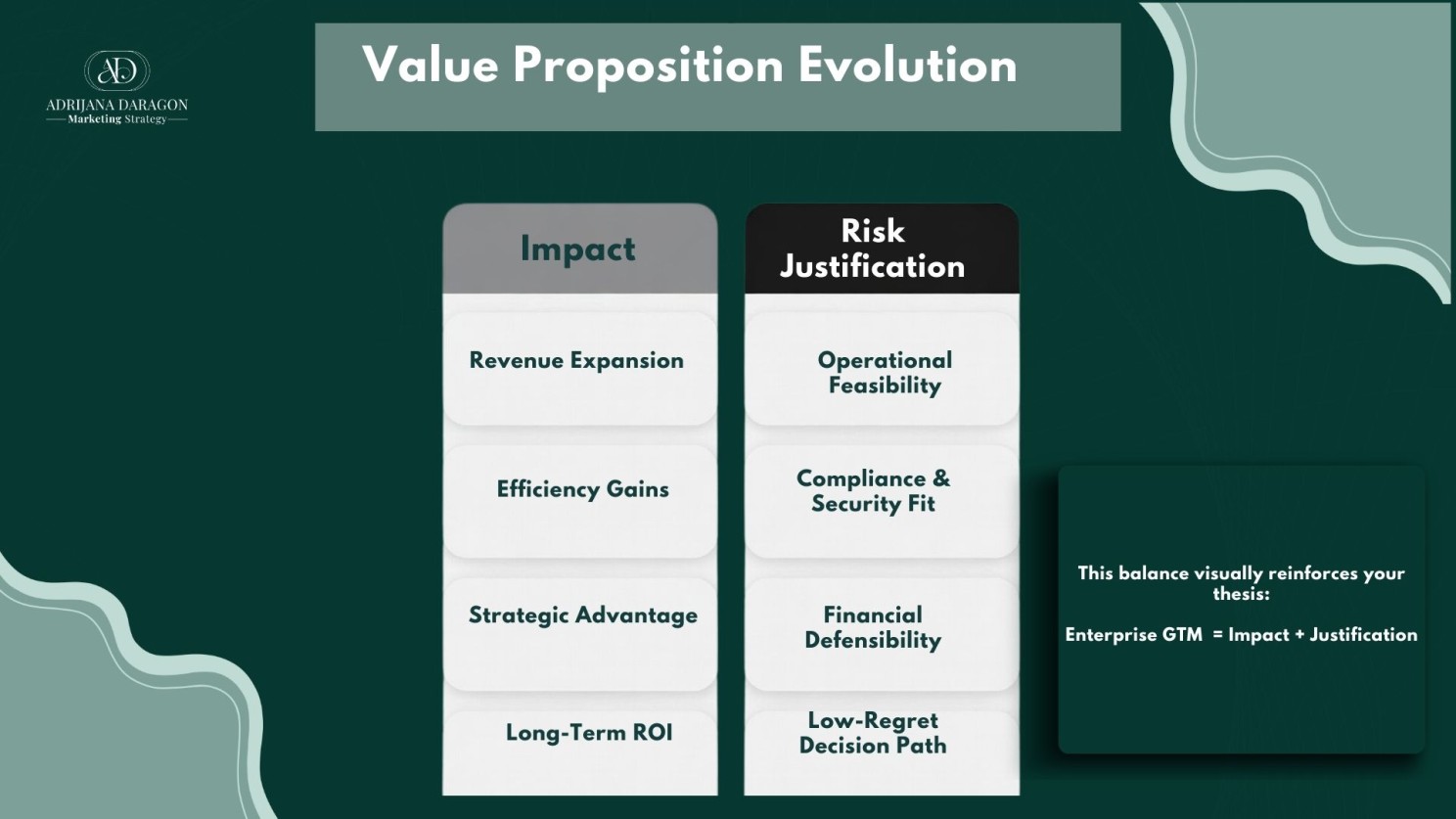
From Value Promise to Defensible Impact
In an enterprise context, being "interesting" is insufficient. Because these leaders optimize for political safety and financial defensibility, your value proposition must be quantified, operationally credible, and risk-aware.
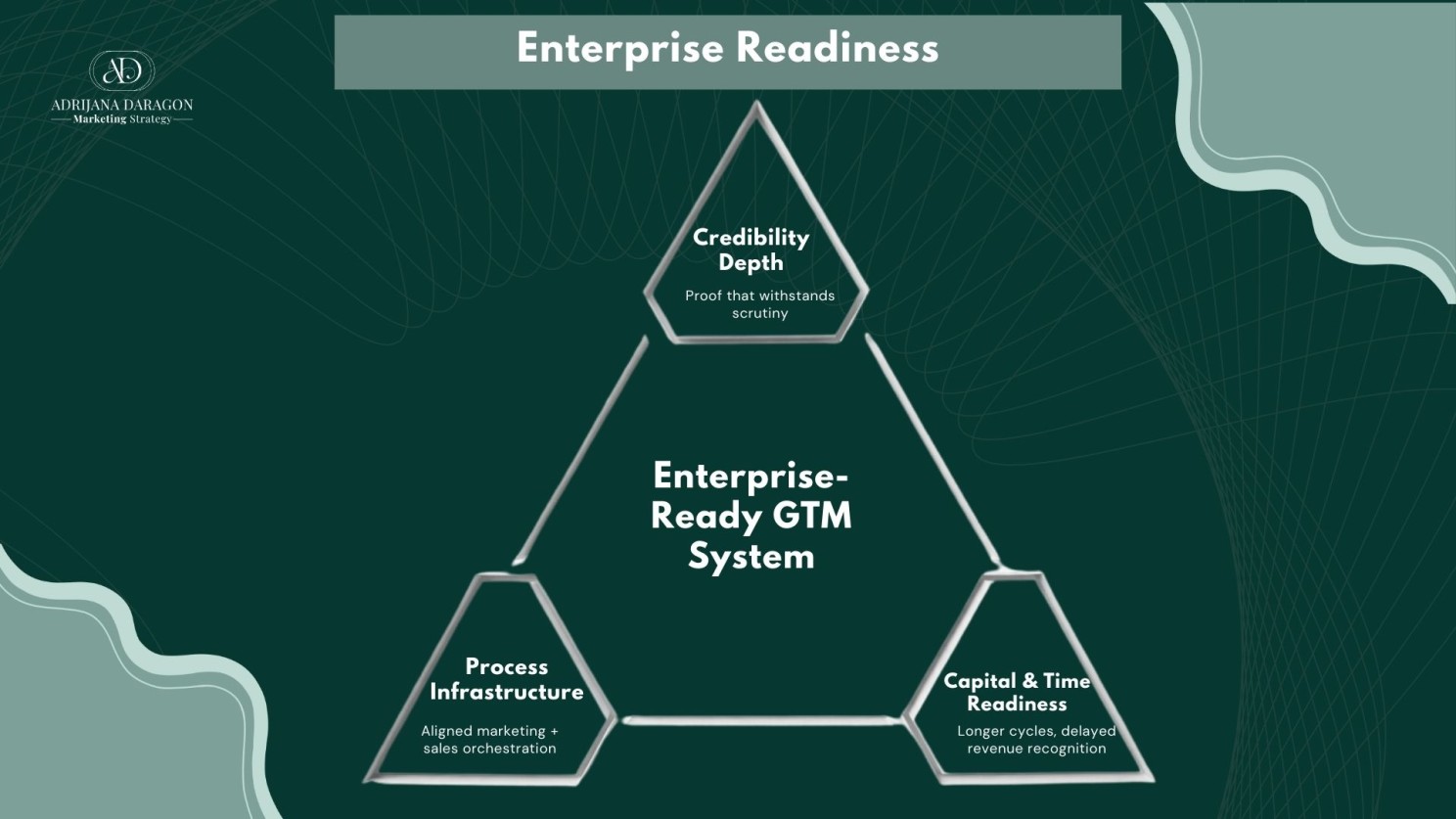
The Enterprise Readiness Triangle
Before you target enterprise accounts at scale, assess these three dimensions:
Credibility Depth: Can your claims withstand executive-level due diligence?
Process Infrastructure: Are marketing and sales aligned on a multi-threaded strategy?
Capital & Time Readiness: Is your leadership prepared for longer, non-linear revenue realization?
Final Perspective: Enterprise GTM does not reward intensity; it rewards structural coherence. If you are balancing multiple buyer systems, remember: design precedes scale.